Understanding Paste Thickener Technology
Paste thickening is an advanced solid-liquid separation process used in mineral processing and mining operations. It helps increase the concentration of solids in slurry by removing excess water and producing a dense, paste-like underflow. This process supports efficient material handling, tailings management, and process water recovery.
How Does a Paste Thickener Work?
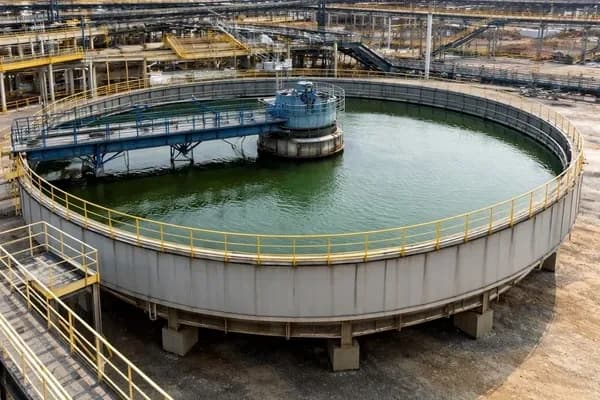
A paste thickener receives slurry containing fine solid particles suspended in water. A suitable flocculant may be added to help fine particles combine into larger aggregates, allowing them to settle more effectively. As the solids settle and compress within the thickener, water separates and rises to the surface, where it can be collected as overflow.
The concentrated solids are discharged from the bottom as a high-density underflow. Depending on the material properties and plant design, this paste can be transported for further processing, used in mine backfilling, or managed through suitable tailings disposal systems.
Key Components of a Paste Thickener
Feedwell: Distributes incoming slurry and supports effective mixing and particle settling. Flocculant Dosing System: Helps fine particles form aggregates for improved settling when required. Settling and Compression Zone: Allows solids to settle, consolidate, and release additional water. Rake Mechanism: Moves settled solids towards the discharge point and supports bed management. Overflow System: Collects clarified water for suitable reuse or further treatment. Underflow Discharge: Removes the concentrated paste for downstream handling.
Why Is Paste Thickening Important?
Paste thickening can increase water recovery, reduce the volume of water-rich tailings, and improve the efficiency of downstream material handling. It can also support more compact tailings deposition and mine backfill operations when site conditions and engineering requirements are suitable.
Performance depends on slurry characteristics, particle size, flocculant selection, feed rate, solids concentration, and operating conditions. Proper testing and process design are therefore important when selecting a paste thickener for an industrial application.
Industrial Applications of Paste Thickeners
Paste thickeners are used in industries where high solids concentration and efficient water separation are important. Their design and operating conditions are selected according to the material being processed and the required underflow characteristics.
Mining and Mineral Processing
In mining operations, paste thickeners help concentrate mineral tailings after valuable minerals have been separated from the ore. The recovered overflow water may be returned to the process when it meets the plant's water-quality requirements.
Mine Backfill
Concentrated tailings can be used in engineered mine backfill systems where the material properties meet project specifications. The paste is transported underground to fill suitable excavated areas, subject to the mine's geotechnical and operational requirements.
Water Recovery and Tailings Management
Recovering water from slurry can reduce freshwater demand and the amount of water carried with tailings. High-density tailings may also allow more controlled deposition and help reduce the footprint of tailings storage in suitable site conditions.
Factors to Consider When Selecting a Paste Thickener
Selecting the right equipment requires an assessment of feed solids concentration, particle-size distribution, settling behaviour, flocculant requirements, target underflow density, throughput, and pumping requirements. Pilot testing and detailed engineering evaluations help determine whether a paste thickener is appropriate for a specific application.
Conclusion
Paste thickener technology plays an important role in modern mineral processing by concentrating solids, recovering process water, and supporting effective tailings management. With appropriate equipment selection, process testing, and operating control, paste thickening can contribute to more efficient and resource-conscious industrial operations.