

 techsales@metzix.com
Jigs (Gravity Beneficiation)
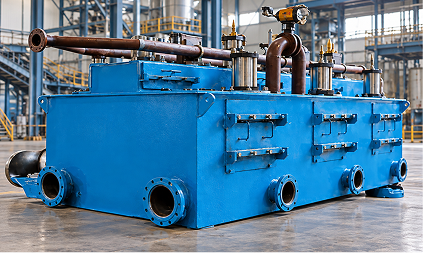
Separation by density, controlled by PLC. Heavy concentrate out, light tailings away, from 10 to 700 TPH.
Engineering Overview
Jig separators are used for gravity beneficiation of minerals and coal, where separation is based on particle density differences. Raw material moves across a perforated jigging bed and is subjected to controlled water pulsation generated by compressed air. The pulsation causes alternating expansion and compaction of the particle bed, allowing material to stratify into density layers. Heavier particles settle in the lower layer and are discharged as concentrate. Lighter particles form the upper layer and are discharged as tailings.
Working Principle
Pulsation is generated by compressed air entering and exhausting the jigging chambers in controlled cycles.
During the pulse stroke the material bed expands and particles disperse.
During the suction stroke particles settle according to density forming stratified layers.
The stratified material moves forward along the jig deck where heavy fractions are discharged through automatic gates.
Key Features & Engineering Advantages
Performance & Economic Benefits
Broad throughput capacity from 10 to 700 TPH with modular widths up to 6000 mm
High recovery without costly heavy-media chemical consumables
Combo Jig capability handles both coarse and fine fractions in one unified footprint
High alumina ceramic lining provides exceptional service life under abrasive ore feed
Technical Specifications
Engineered Standards| Design Parameter / Specification | Technical Standard / Value |
|---|---|
| Capacity range | 10 to 700 TPH |
| Available widths | 500, 750, 1000, 1500 to 6000 mm |
| Jigging water pressure | Approx. 0.8 bar |
| Control system | PLC controlled pulsation frequency and stroke |
| Discharge system | Electro-hydraulic discharge gates |
| Wear protection | High alumina ceramic lining in jig chambers |